
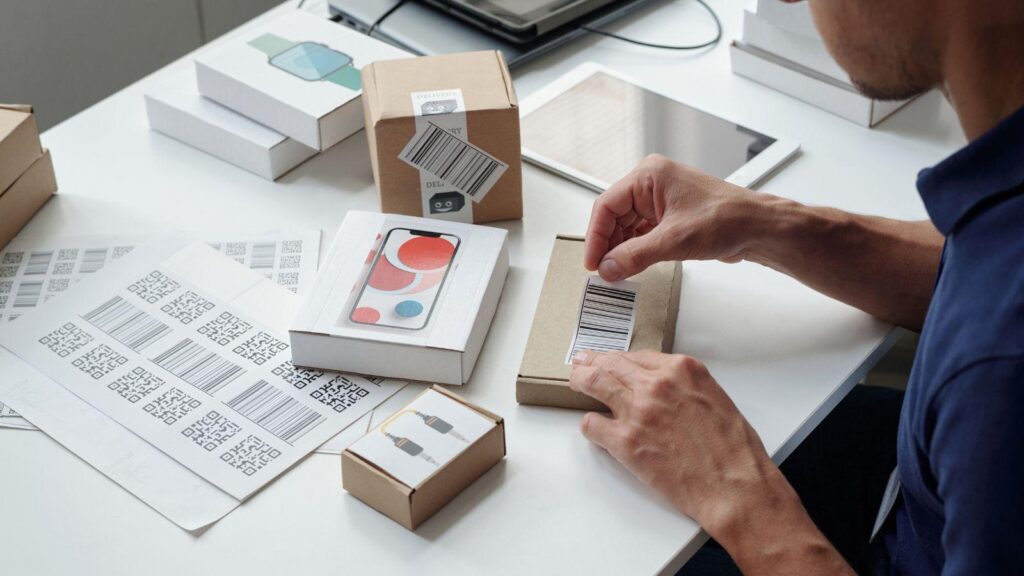
In today’s crowded marketplace, the brands that win are not always the ones with the biggest advertising budgets. They are the ones that understand where attention lives — and one of the most powerful, most consistently overlooked places for that attention is the physical packaging a customer holds in their hands. Before anyone reads a review, visits a website, or engages with a social post, they interact with packaging. It is, in many ways, a brand’s most intimate first impression.
Entrepreneurs who treat packaging as an afterthought are leaving one of their most valuable marketing assets underused. This guide breaks down how to think about packaging strategically — from initial design decisions and material choices to supplier sourcing and ordering at scale — so that every box, bag, or sleeve your brand puts into the world tells the right story.
The Touchpoint Most Entrepreneurs Overlook
Most early-stage entrepreneurs concentrate their branding energy in predictable places: a polished website, a consistent social media presence, a well-crafted logo. These are all important. But digital branding gets a customer to the purchase. Physical packaging gets a customer to come back.
There is a reason unboxing videos continue to rack up millions of views across YouTube, TikTok, and Instagram. Consumers are not just buying a product — they are buying the feeling of receiving it. That feeling is constructed almost entirely by packaging. The weight of the box, the way a lid lifts, whether tissue paper rustles inside, whether a personalized card greets them — all of it accumulates into an emotional impression that no digital campaign can fully replicate.
For entrepreneurs selling physical products, packaging is a guaranteed touchpoint. Unlike an ad that gets scrolled past or an email that goes unopened, packaging lands directly in the hands of the buyer. That is not a coincidence — it is an opportunity. The brands that recognize this distinction build deeper loyalty, generate more organic word-of-mouth, and create visual assets that customers voluntarily share with their networks.
Packaging Is Not Just a Container — It Is a Brand Statement
Think about the last time a piece of packaging genuinely impressed you. Chances are it did not just protect the product well — it communicated something meaningful about the brand behind it. Premium packaging signals quality before anyone has experienced what is inside. Thoughtful, sustainable packaging signals values. Playful design signals personality. Packaging does not simply contain — it speaks.
This is why the most strategically minded entrepreneurs treat packaging not as a line-item expense but as a brand investment. The difference between a product that feels generic and one that feels distinctive often comes down entirely to how it is presented physically. Packaging is the bridge between what a brand promises and what a customer actually experiences. Apple understood this decades ago, and it is a principle that scales down just as effectively to a small-batch artisan brand as it does to a global technology company.
What Your Packaging Communicates Before It Is Even Opened
The exterior of your packaging carries the majority of the initial branding weight. Color palette, typography, logo placement, finish type — matte, gloss, soft-touch — and structural shape all contribute to the brand impression before the first flap is lifted. A matte black box with foil-stamped lettering communicates something fundamentally different from a kraft paper wrap with a minimalist hand stamp. Neither is inherently better. What matters is that the visual language of your packaging aligns with the broader story your brand is already telling everywhere else.
Colors carry particular psychological weight in packaging. Consumers form subconscious impressions based on packaging color within seconds of first contact — a fact well-established in consumer behavior research. This is not a reason to overthink the choice, but it is a reason to make it intentionally rather than defaulting to whatever seems cheapest at the printer. Your packaging colors should mirror your brand guidelines — the same tones you use on your website, in your photography, and across your marketing materials. Consistency in this area is not a nice-to-have. It is what makes a brand recognizable.
The Unboxing Moment as a Brand Narrative
If the exterior is your packaging’s opening statement, the interior is where the brand story fully unfolds. The unboxing experience — what a customer encounters once they open the package — is where thoughtful brands separate themselves from forgettable ones. Custom tissue paper in brand colors, a brief handwritten note or printed insert, sustainable fill material that does not look like remnants from a 1990s hardware shipment — these interior elements transform the act of receiving a product into an experience worth remembering and, increasingly, sharing publicly.
This is not about spending extravagantly. A simple, well-designed thank-you card that reinforces your brand voice and invites the customer to connect with you on social media costs very little but accomplishes a great deal. It gives the customer a clear next step and gives your brand a second point of contact within the same delivery — two outcomes that digital advertising would require separate spend to achieve.
The Design Decisions That Define Your Packaging
Getting from a branding concept to a finished, printable package involves a series of concrete decisions, and the quality of those decisions determines how effectively your packaging works as a marketing tool. Structure, material, and print finish all need to be considered together, not in isolation.
The structural design of a package — sometimes called the dieline — determines how a box or bag takes physical form. For custom packaging, you or your designer will work from a dieline template to lay out graphics in a way that accounts for folds, seams, and panel placement. Getting this right matters more than most entrepreneurs realize until they see a proof. A design that looks excellent as a flat file but does not account for how the box assembles can result in a logo split awkwardly across a seam or text that becomes unreadable once the package is constructed.
Working With a Designer vs. Taking the DIY Route
Entrepreneurs face a genuine decision at the design stage: hire a packaging designer or take on the work independently. For those with a design background or access to tools like Adobe Illustrator, the DIY approach is viable for simpler packaging formats such as labels, stickers, and basic folding cartons. For custom structural shapes, premium print projects, or any packaging meant to carry significant brand weight, working with an experienced designer is usually worth the cost. Entry-level freelancers typically charge anywhere from a few hundred dollars for basic label work up to $1,000 or more for a complete custom packaging suite, while specialized packaging design agencies command significantly higher rates for complex, research-driven work.
Regardless of the route chosen, the single most important step before committing to a full production run is requesting a physical sample. Colors that look one way on a calibrated design monitor can print very differently depending on the substrate and print method. Catching that discrepancy on a modest sample order is far better than discovering it on 3,000 units sitting in a warehouse.
Choosing Materials That Tell the Right Story
Material selection is one of the most direct ways an entrepreneur communicates brand values through packaging — and it is becoming increasingly important to get right. Consumer expectations around sustainability have shifted dramatically. A growing and vocal segment of buyers actively notices what packaging is made of, whether it is recyclable, and whether the brand appears to be making genuine efforts toward reducing waste. Packaging that signals environmental responsibility can meaningfully strengthen the emotional connection between a brand and its customers.
This is especially relevant in product categories where the customer relationship already carries a sense of personal meaning — gifts, accessories, handcrafted goods. For small brands placing wholesale orders, sourcing eco-friendly jewelry packaging in bulk not only lowers the cost per unit but turns every unboxing into a tangible brand statement that resonates with today’s sustainability-minded consumers.
Beyond environmental credentials, material choices also affect the perceived value of the product inside. Rigid setup boxes feel premium. Folding cartons feel accessible and practical. Flexible pouches feel modern and can offer functional benefits like resealability for repeat-use products. The material needs to align not only with the product’s physical requirements — weight, fragility, moisture sensitivity — but also with where the brand sits in the market. A $15 product delivered in packaging that communicates $2 worth of effort creates a damaging disconnect. The right material choice, even at modest cost, bridges that gap and reinforces the perceived value of what is inside.
Sourcing Suppliers and Scaling Smart
Once the design is finalized and material choices have been made, the next challenge is finding the right supplier. The packaging manufacturing landscape spans domestic printers, offshore manufacturers — particularly in China and Southeast Asia — and a growing category of mid-size sustainable suppliers who specialize in small-to-medium business runs. Each option comes with different trade-offs in cost, lead time, minimum order quantity (MOQ), and quality control.
Domestic suppliers typically offer faster turnaround, lower communication barriers, and more manageable MOQs, making them a practical choice for initial runs or for brands still iterating on a packaging design. Offshore manufacturers generally offer lower per-unit pricing at higher volumes, but they require longer lead times — often six to twelve weeks including shipping — and the absence of an in-person quality review introduces real risk when specifications are not communicated with complete precision.
Understanding Order Minimums and the Economics of Scale
One of the defining realities of custom packaging is that per-unit cost drops sharply as order volume increases. A custom rigid box might cost $4.00 per unit at 100 units, around $1.80 at 500 units, and under $1.00 at 2,500 units. This pricing structure creates a tension for early-stage entrepreneurs: ordering enough to reach a reasonable per-unit price requires committing to a volume that can feel risky before the product has proven itself in the market.
The practical approach is to treat the first packaging order as an intentional learning run. Order conservatively — enough to fulfill initial demand and collect real customer feedback on how the packaging lands — and build those insights into your next order. Iterating on packaging based on real-world customer response is far more effective than attempting to engineer the perfect solution entirely on paper before a single unit has shipped.
As order volumes grow, a few dynamics are worth keeping in mind:
- Custom folding cartons ordered at 1,000 or more units from a domestic supplier frequently reach cost parity with offshore manufacturers once shipping costs and extended lead times are factored into the comparison.
- Sustainable materials — recycled kraft board, seed paper inserts, soy-based inks — carry a smaller cost premium at scale than most entrepreneurs initially assume, particularly as competition among eco-packaging suppliers has grown significantly over the past few years.
- Standardizing box dimensions across your product line reduces tooling costs and simplifies reordering, which compounds into meaningful savings as your catalog expands.
Brand Consistency Across Your Packaging Suite
As a product line grows, consistency across packaging formats becomes critical to brand recognition. A brand that launches with a single product may find itself managing five, ten, or fifteen SKUs within a few years — each with its own packaging format, but all needing to feel as though they belong to the same family. Achieving that requires a packaging system, not just a series of individual packaging decisions made one product at a time.
A packaging system defines the elements that remain constant across all formats — color palette, typography, logo usage, finish type, label architecture — and allows variation only where differentiation between products is genuinely needed, such as by product variant, size, or collection line. The brands that build this kind of visual discipline early are the ones whose packaging is instantly recognizable from across a retail shelf or in a customer’s social media post.
Building a packaging system also pays practical dividends in operations. Working with consistent suppliers using consistent specifications reduces error rates, simplifies reordering, and makes packaging procurement manageable as team responsibilities shift and grow.
What Good Packaging Actually Returns to Your Business
Entrepreneurs are accustomed to measuring marketing performance through clicks, impressions, and conversion rates. Packaging is harder to track with the same precision — but that does not mean the return is unquantifiable. Several indicators reliably signal that packaging is doing real work for a brand.
Customer reviews and unsolicited feedback are among the most telling. When buyers mention the packaging specifically — noting how beautiful the box was, how carefully everything was wrapped, or admitting they kept the box — that is evidence that the packaging created an emotional impression strong enough to motivate comment. That kind of feedback is not coincidental. It is the result of intentional design choices that made the customer feel something.
Social media shares and unboxing posts are another concrete indicator, particularly for brands in aesthetics-forward categories. A customer who photographs your packaging and posts it to their network is providing your brand with earned media — content created by a real person, shared to a real audience, with a level of authenticity that paid advertising cannot purchase.
Repeat purchase rates are also worth examining through the lens of packaging quality. A first purchase is typically driven by product interest. A second and third purchase are driven by the full experience — and the physical experience of receiving your product is a non-trivial part of that equation. If first-time buyers are strong but repeat rates are lagging despite positive product reviews, the post-purchase experience — including how and in what the product arrives — deserves a closer look.
Packaging as a Long-Term Brand Asset
The most enduring product brands — whether global giants like Apple or beloved local businesses with a loyal community of a few thousand customers — share a common understanding: packaging is not a cost to minimize. It is a canvas on which brand meaning is built and reinforced at the exact moment a customer’s attention is most fully engaged.
For entrepreneurs building from the ground up, the packaging conversation can feel secondary to product development, pricing strategy, and digital marketing. But the brands that build lasting recognition tend to be those that understood early on that every physical touchpoint matters — and that the package a customer opens is, in that moment, the most vivid representation of everything the brand stands for.
Approach your packaging with the same strategic intention you bring to your website or your marketing campaigns. Make design and material decisions with purpose, source intelligently as you scale, and treat every delivery your brand sends as the brand moment it truly is. Because when a customer opens your package and their first thought is “this feels like a real brand” — that is not accidental. That is a branding strategy working exactly as it should.